
Fifth Wheel vs Travel Trailer: Which One Is Right for You?
So you’re stuck between a fifth wheel and a travel trailer. Welcome to the club.
This is one of the biggest, and most overwhelming, decisions RVers face. And it’s not just a first-timer problem. Whether you’re shopping for your very first rig or you’re ready to upgrade your setup, this choice can send you deep into forums, dealership lots, and late-night YouTube marathons (speaking from experience).
We’ve been there. We’ve owned both.

Right now, we live full-time in a 44′ fifth wheel toyhauler, but before this, we had a travel trailer and a few other bumper pulls.
Each one had its perks and taught us something new. If we’ve learned anything, it’s that the “right choice” really depends on how you travel and what you need from your RV.
In this post, we’ll break down the real differences between travel trailers and fifth wheels, go over the pros and cons of each, and help you decide which one fits your lifestyle best. Whether you’re a weekend warrior, a full-time traveler, or somewhere in between, we’ve got you covered.
What Is a Travel Trailer?
A travel trailer is a type of towable RV that hitches to the back of your vehicle using a standard ball mount and receiver. These are commonly referred to as “bumper pulls,” even though the hitch connects to a frame-mounted receiver, not the bumper itself.
Travel trailers come in a wide range of sizes and configurations. You’ll find everything from compact teardrops and lightweight campers to large bunkhouse models with multiple slide-outs.
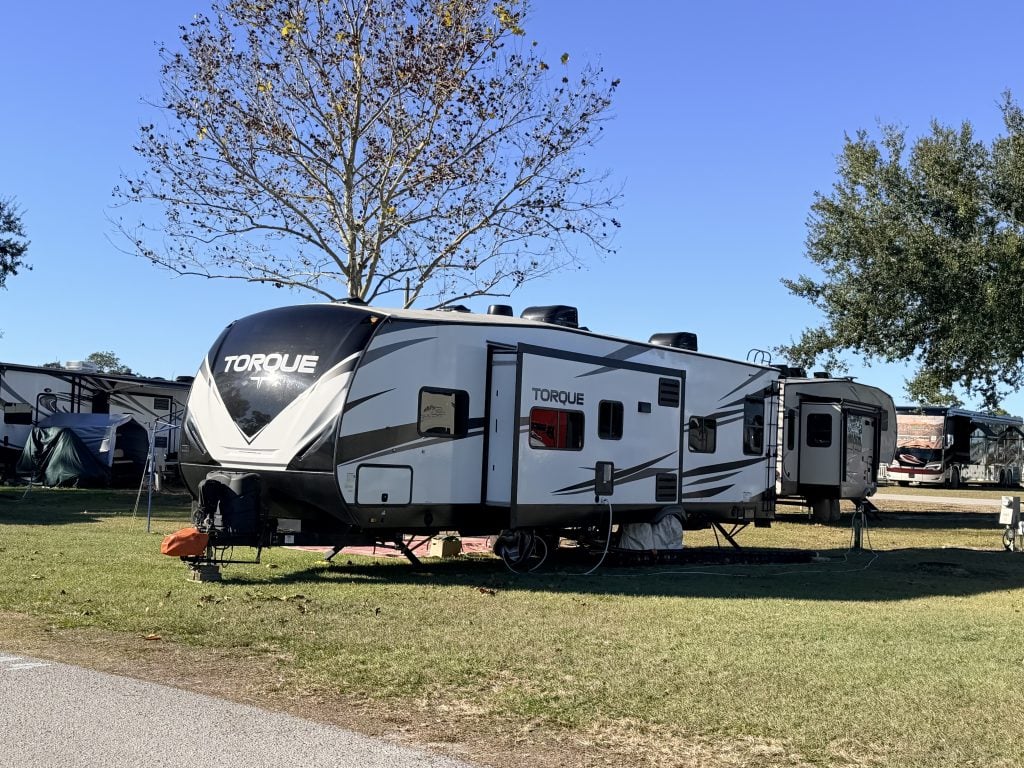
They tow behind the vehicle, rather than over the truck bed, which sets them apart from fifth wheels in both design and handling.
Travel trailers can also come in toyhauler floorplans, which include garage space in the rear. These typically share the living area rather than offering a separate garage room like most fifth wheels.
Pros of Travel Trailers
When we were part-time RVers taking mostly long weekend trips, travel trailers were the perfect match. Here’s what we loved about them:
- More flexible towing options. You don’t necessarily need a giant diesel truck to tow a travel trailer. Many can be hauled by SUVs or half-ton trucks, which is great if you’re trying to use a vehicle you already own. That flexibility was a big reason we chose a travel trailer in the beginning.
- You keep your truck bed. Since travel trailers hitch behind your vehicle, you still have full use of your truck bed. We were able to haul a 4-wheeler, tools, and storage bins right alongside our RV gear, which came in handy on almost every trip.
- Usually no stairs inside. This can be a big plus if you have mobility concerns or just prefer one level of living space.
- Generally more affordable. Travel trailers tend to cost less than fifth wheels in terms of both purchase price and the vehicle required to tow them. It was a more budget-friendly way for us to get started and still enjoy a lot of comforts.
- Can fit in more campsites. Many travel trailers are shorter in both height and length, which can give you access to more state parks and older campgrounds with size restrictions.

Cons of Travel Trailers
As much as we enjoyed owning a travel trailer, there are definitely a few drawbacks to consider:
- Handling and stability can be tricky. Because of the way travel trailers hitch behind the vehicle, they tend to sway more on the highway, especially in high winds or when being passed by large trucks. We used anti-sway bars, which helped a lot, but we still felt it more than we ever do with our fifth wheel. Longer trailers also need careful weight distribution and can feel less stable in rough conditions.
- Wider turn radius. Travel trailers pivot farther behind the tow vehicle, which means they need more space to make turns. Fifth wheels, by contrast, can often be jackknifed due to their over-the-axle connection, making them easier to maneuver in tight spots.
- Limited ceiling height and storage. Most travel trailers don’t offer the same headroom or pass-through storage bays you’ll find in a fifth wheel, especially in smaller models.
- Fewer premium materials and features. Travel trailers are often built to be lighter and more affordable, which can mean less insulation, fewer residential features, and materials that feel a bit more budget-friendly. Fifth wheels tend to dominate the luxury space in both layout and finish.
What Is a Fifth Wheel?
A fifth wheel is a type of towable RV that connects to a hitch installed in the bed of a pickup truck, directly over or slightly in front of the rear axle. This hitch design changes the way the trailer is towed and requires a specific type of truck setup.
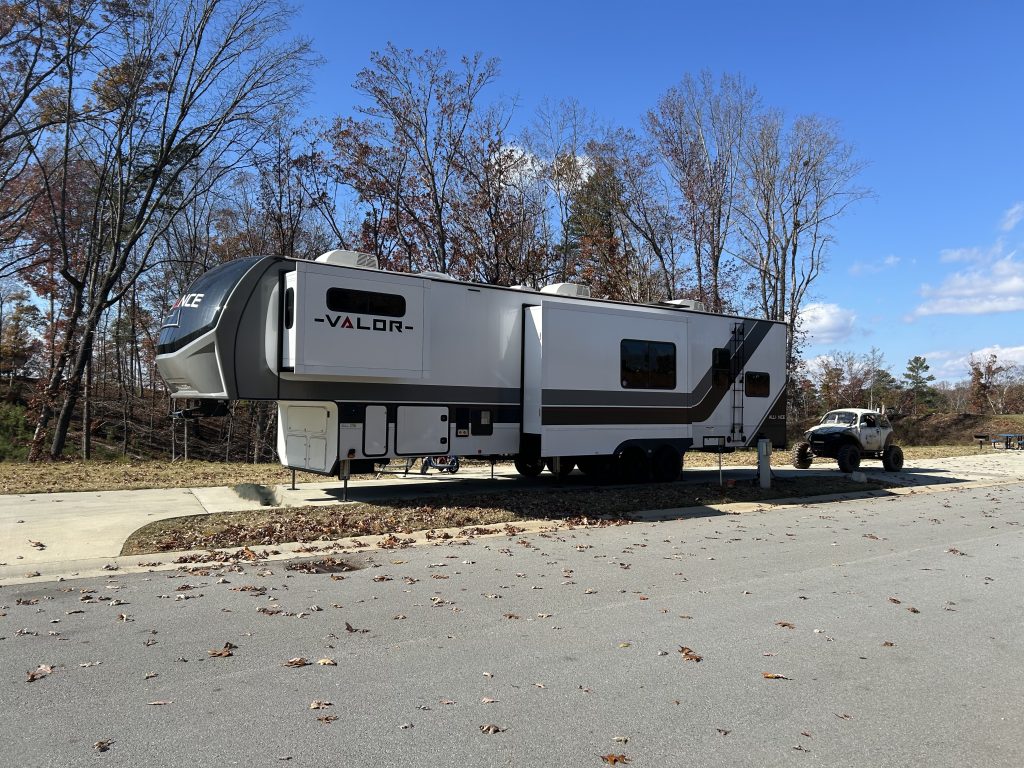
Fifth wheels are usually larger than travel trailers and are built with a multi-level design. The front of the RV sits above the truck bed, which creates a split-level interior layout. This upper section is commonly used for the bedroom or bathroom, and the main living space is typically on the lower level.
We currently live full-time in a 44′ fifth wheel toyhauler, and that size and layout have been a game changer for us. From the residential feel to the massive storage, it’s a big upgrade in space and comfort.
Due to their size and hitching requirements, most fifth wheels need a three-quarter ton or one-ton truck for safe towing. The hitch also takes up space in the truck bed, which affects how much cargo you can carry there. We don’t remove ours very often since it’s bulky and takes two people to safely lift out, so we’ve learned to work around it when packing gear.
Fifth wheels also come in toyhauler versions with a rear garage for motorcycles, ATVs, or other gear. One big perk is that most fifth wheel toyhaulers offer a fully enclosed garage space that’s completely separate from the living area.
Pros of Fifth Wheels
After switching to a fifth wheel and living in it full-time, we quickly saw why so many RVers swear by them for extended travel. For us, the extra space, comfort, and towing stability have made a huge difference in how we live and move on the road. Here’s what we’ve come to love:
- Smoother, more stable towing. Fifth wheels are hitched over the truck’s rear axle, which distributes weight more evenly and improves overall stability. Compared to our travel trailer days, the difference in sway and bounce was noticeable right away. Highway driving feels more controlled, even on rough roads or in windy conditions.
- More living space and headroom. These rigs often come with taller ceilings and wide-open layouts. Ours has plenty of space to stretch out, and it genuinely feels more like a home than a camper.
- Split-level layouts. The raised front area creates a natural separation between sleeping and living spaces. We love the privacy this gives us, especially when one of us is working and the other wants to rest or relax.
- Luxury features and materials. Fifth wheels often include better insulation, upgraded finishes, and residential-style appliances. In our current rig, we’ve got a spacious bathroom, residential fridge, and tons of storage that we didn’t have in any of our previous setups.
- Higher tank and cargo capacities. One of our favorite upgrades is our tank setup. We have two grey tanks, two black tanks, and a fresh water tank that makes boondocking way more practical for longer stays.
- Auto-leveling and simplified setup. We use our auto-leveling system all the time, and the push-button operation for our slides and awnings (both inside and outside) makes getting settled at camp fast and easy.
- Improved toyhauler layout. If you’re looking at toyhaulers, the fifth wheel version offers a clear advantage. Most have a dedicated garage that’s completely separate from the main living area. That means no hauling fumes or folding furniture every time you park, and we’ve found the permanent layout to be more comfortable overall.

Cons of Fifth Wheels
Fifth wheels offer a lot, but they’re not without trade-offs. After living in one full-time, here are some of the downsides we’ve run into:
- You lose your truck bed. The hitch sits in the middle of your truck bed and stays there while traveling. That limits your ability to carry things like bikes, firewood, or large storage bins unless you get creative. We’ve learned to work around it, but it’s something to consider when planning your gear.
- Heavy and bulky hitch. Fifth wheel hitches are large and not easy to remove. In our case, it’s a two-person job and not something we do often. That means we typically leave it installed, which permanently reduces how much usable truck bed space we have.
- You usually need a bigger truck. Most fifth wheels require a three-quarter ton or one-ton truck to tow safely. That’s a bigger investment up front, and it may not be the vehicle you already have in your driveway.
- Heavier and taller. Fifth wheels are often taller and heavier than travel trailers, which can limit where you travel. Low bridges, weight-restricted roads, and older campgrounds may be off the table depending on your rig’s size.
- Multi-level interior. While we like the split-level layout, it does mean there are stairs inside the RV. If you have mobility concerns or prefer everything on one level, that could be a dealbreaker.
- Takes up more space. These rigs tend to be longer overall and often need more room to turn, park, and store.
How to Choose Between a Fifth Wheel and a Travel Trailer
TThere’s no one-size-fits-all answer here, and that’s a good thing. Both travel trailers and fifth wheels can be excellent choices. It really comes down to how you travel, what you’re towing with, and what kind of space and comfort you’re after.
Here are a few questions to help you make the right decision for your lifestyle:
- What vehicle do you have? If you already own an SUV or half-ton truck, a travel trailer might be your most practical and budget-friendly option. Fifth wheels usually require a larger truck with a higher towing capacity and a fifth wheel hitch installed in the bed. If you’re not even sure a towable RV is right for you, check out our comparison of Towable vs Drivable RVs to help narrow things down.
- How often are you traveling? For full-time or seasonal travel, fifth wheels offer more space, insulation, and home-style features that can make life on the road more comfortable. When we transitioned to full-time RVing, that upgrade made a huge difference. If you’re just taking a few trips a year or sticking to weekends, a travel trailer may be simpler to manage.
- Where do you like to camp? Travel trailers tend to be a better fit for smaller campgrounds, state parks, or older facilities with size limits. Their lower height and shorter lengths open up more options. Larger fifth wheels can limit where you go, especially if you’re towing a toyhauler.
- How much room do you need? If taller ceilings, bigger tanks, or separate living zones matter to you, a fifth wheel will likely deliver that better than a travel trailer.
- Do stairs matter to you? Fifth wheels almost always have stairs inside due to their split-level design. If mobility is a concern or you just prefer single-level living, that’s worth factoring in.
- Are you planning to boondock? Fifth wheels typically come with larger holding tanks, better insulation, and more generator space, making them well-suited for off-grid camping. We’ve been able to stay off-grid for longer stretches thanks to the added capacity in our fifth wheel.
- How much setup are you comfortable with? Travel trailers may be quicker to hitch and unhitch, but many fifth wheels come with auto-leveling systems and slide controls that make setting up at camp easier overall.
Still piecing together what kind of RV is right for you? Take a look at our full breakdown of RV types to see how fifth wheels and travel trailers compare to other categories. You can also explore our guide on choosing the right RV for a deeper dive into matching your rig to your lifestyle, travel goals, and budget.

Making the Right Choice for Your Travel Style
Choosing between a fifth wheel and a travel trailer isn’t about which one is better. It’s about which one fits you.
Your tow vehicle, your travel style, and your comfort priorities all play a role in making the right decision. We’ve owned both and loved each one for different reasons.
When we were part-time RVers taking weekend trips, our travel trailer made the most sense. It gave us flexibility, affordability, and just enough space to enjoy the road. But when we made the switch to full-time living, our fifth wheel became a clear winner with its roomier layout, smoother towing, and residential feel.
If you’re still unsure, take your time. Walk through a few floorplans and explore what matters most to you. Try to picture what a weekend trip or a full travel season would actually look like in each one.
When the right rig shows up, you’ll know. And you’ll be that much more confident rolling out on your next adventure.
New to RV Life? Here’s What to Read Next
If you’re just starting your RV journey, we’ve got more resources to help you hit the road with confidence:
- 👉 RV Essentials for Beginners – Gear you actually need (and what you can skip)
- 👉 How to Plan Your First RV Trip – A step-by-step trip planning guide
- 👉 Helpful RV Apps – Navigation, campgrounds, weather, and more
- 👉 Unwritten Rules of RV Etiquette – Don’t be that neighbor
- 👉 RV Travel Is the Best Way to Explore the US – In case you need a reminder of how awesome this life is
Whether you’re setting up for the first time or the fiftieth, we’re glad you’re here—and we’re always just a blog post away.