
9 Things to Do on Cumberland Island for Adventurous Souls
Planning a trip to Cumberland Island and wondering what’s actually worth your time? Whether you’re into hiking, history, or just looking for a wild, off-grid escape, this untamed Georgia barrier island has something for you.
We’ve explored Cumberland by private boat, wandered its trails, visited the ruins, and watched wild horses graze under ancient oaks. After multiple trips, including a full-day visit and seasonal returns, we can confidently say there’s a lot more to do here than most people expect.
We’re sharing the best things to do on Cumberland Island, from iconic stops like the Dungeness Ruins to lesser-known adventures like backcountry camping and managed hunts. Whether you’re a first-timer or planning a return trip, this guide is for curious adventurers who want to see more than the beach.
1. Explore the Dungeness Ruins
If there’s one place that defines the mysterious charm of Cumberland Island, it’s the Dungeness Ruins. These ivy-covered remnants of a Carnegie family mansion are haunting, quiet, and completely unforgettable.
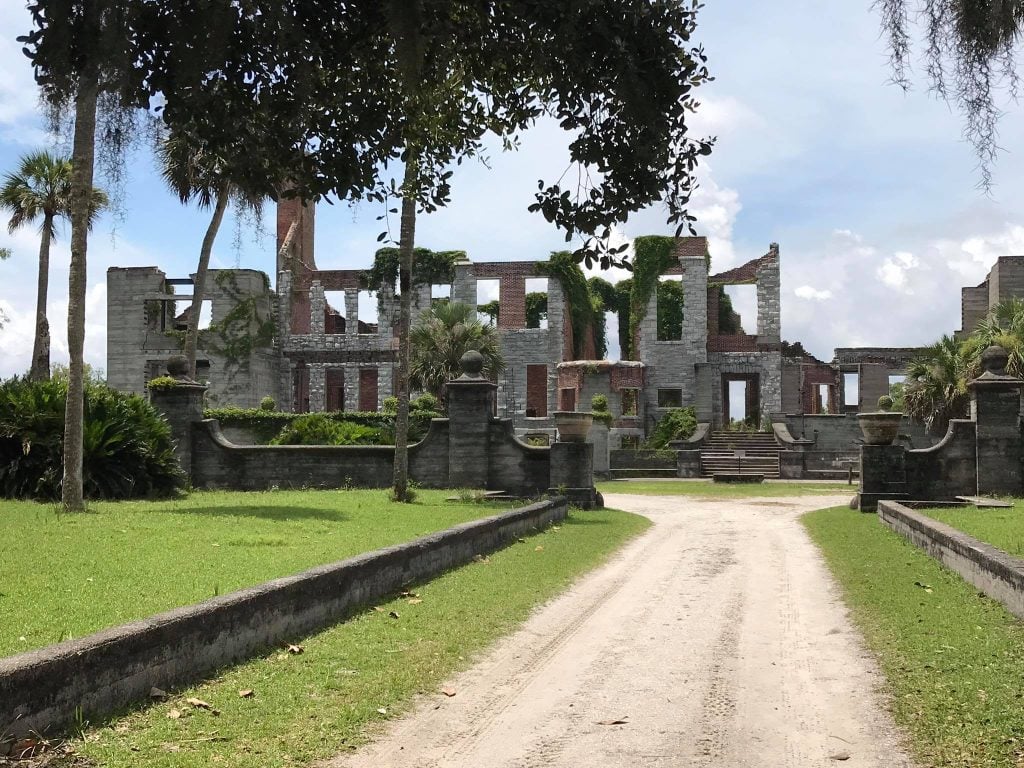
Built in the late 1800s as a winter home for the wealthy Carnegie family, Dungeness once boasted multiple levels, sprawling wings, and over 30 bedrooms. After a disastrous fire in 1959, only it’s stone frame remains.
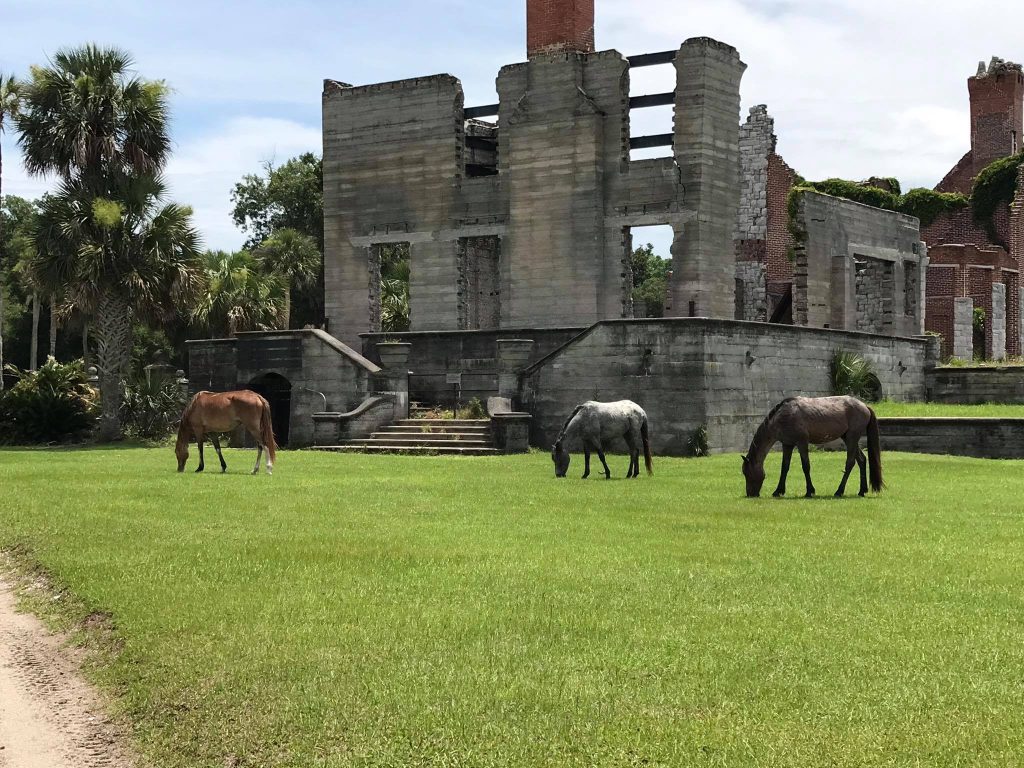
We walked the flat trail from the Dungeness dock and stayed longer than we expected, just soaking it in. There are interpretive signs nearby, but honestly, it’s the stillness and sense of history that hits hardest.
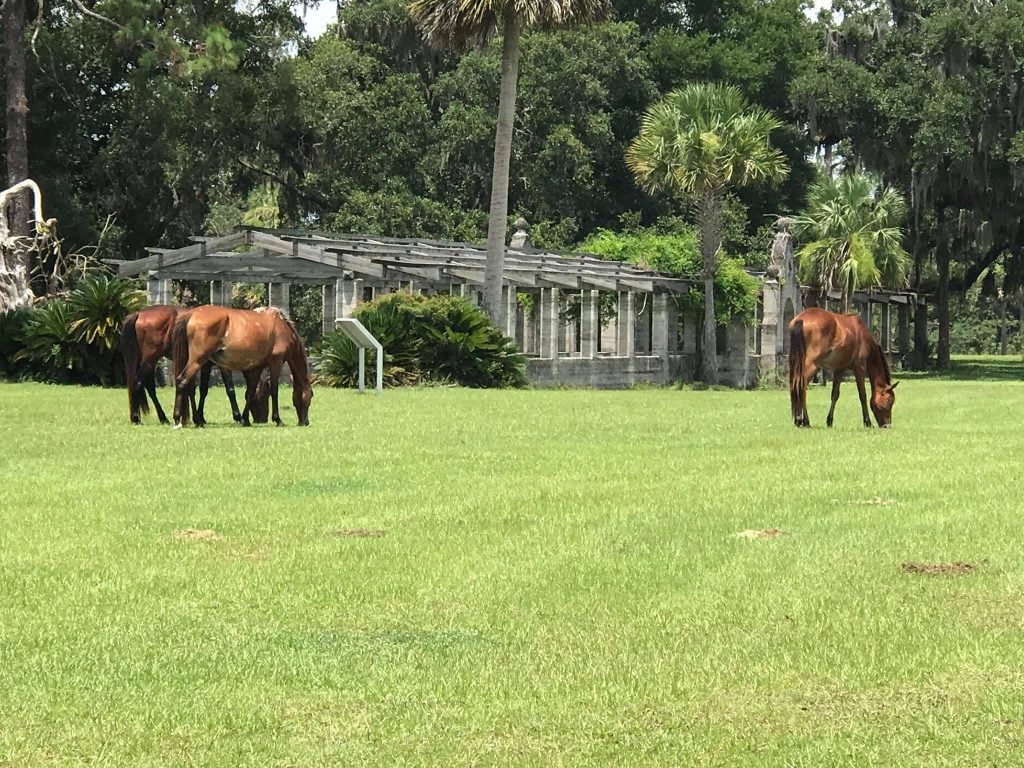
Bring your camera or just stand in the silence. This spot makes a lasting impression.
2. Visit Plum Orchard Mansion
If you’re curious about how the Carnegies really lived, Plum Orchard Mansion is worth the trip. Built in 1898 as a wedding gift for one of the Carnegie children, this 20,000-square-foot home offers a rare glimpse into the Gilded Age on a remote barrier island.
Unlike the Dungeness Ruins, Plum Orchard is still fully intact and open for guided tours. Inside, you’ll find original furnishings, a squash court, ornate details, and even a working elevator. It feels oddly luxurious for a place that’s so isolated.
The catch? Getting there requires some effort.
Plum Orchard sits ~7 miles north of Sea Camp. You can hike, bike, or take the Lands and Legacies van tour (most practical way to fit this visit into a day trip).
Tours are free and offered when a ranger is on site, which varies.
3. Take a Guided Tour with the National Park Service
Cumberland Island has layers of history and ecology that are easy to miss if you’re just wandering. That’s where guided tours come in.
Lands and Legacies Tour
This van-based tour covers much of the island’s northern half, including Plum Orchard Mansion and The Settlement. It’s ideal for those who want to see remote parts of the island without a full-day hike. The tour runs most days and costs around $65 per person. Reservations are required and can be made through the Cumberland Island Ferry site.
Ranger-Led Programs
If you’re on the southern part of the island, check the schedule for ranger-led walks and talks. Options include:
- Footsteps Tour (near Dungeness)
- Under the Oaks naturalist talk
- Beach Program for families and kids
- Dockside Orientation at Sea Camp
These programs are free and typically last 30 to 45 minutes. We’ve attended a couple of these and always walk away with a fun new fact.
Self-Guided Audio Tours
If you prefer exploring solo, keep an eye out for QR code signs along the trails. They link to short audio segments about the area. We tried a few on our last trip and found them helpful. Just be aware that cell service can be limited in some spots.
4. Hike or Bike the Island’s Trail System
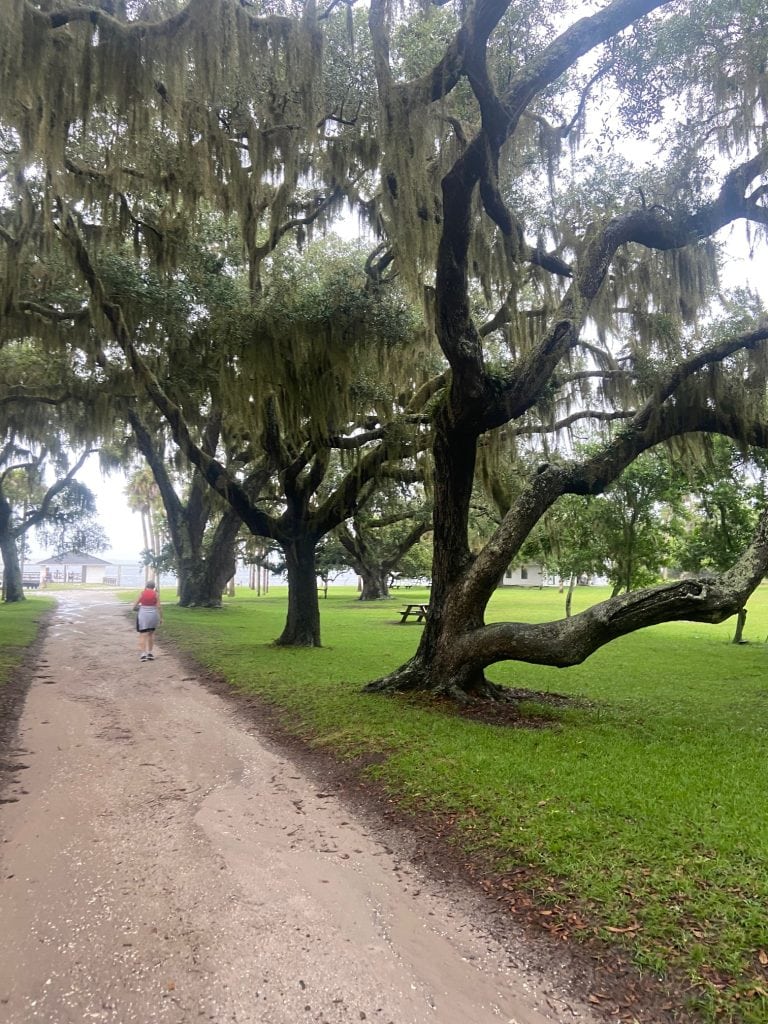
With more than 50 miles of trails winding through the forest, marsh, and beaches, Cumberland Island is a dream for anyone who loves exploring on foot or by bike.
The terrain is mostly flat, but it’s still wild and remote, so its important to plan ahead.
Southend Loop Trail
If you’re here for a day trip, this 4.3-mile loop is the best bang for your buck.
It takes you along a well-marked path past the Dungeness Ruins, along the marsh boardwalks, across a stretch of empty beach, and back through the trees.
River Trail & Sea Camp Beach Trail
Looking for something shorter? The River Trail is an easy 0.8-mile walk that’s great for birdwatching.
The Sea Camp Beach Trail offers quick access to the beach from the main dock and is one of the most direct routes to the shoreline.
Nightingale and Northend Trails
Nightingale is a quiet, forested loop near the marshes that feels a bit more off-the-beaten-path. For those planning a longer stay or biking in, the Northend and Wilderness Trails stretch deep into the island’s interior.
These routes are remote and best for experienced hikers or overnight campers.
Can You Bike on the Island?
Yes, but you’ll need to bring your own. The ferry does allow bikes with a reservation and small fee. Having a bike makes it much easier to reach far-off locations like Plum Orchard or The Settlement, especially if you’re not joining a van tour.
No matter how you explore, bring a map, plenty of water, and expect to have most of the trail to yourself.
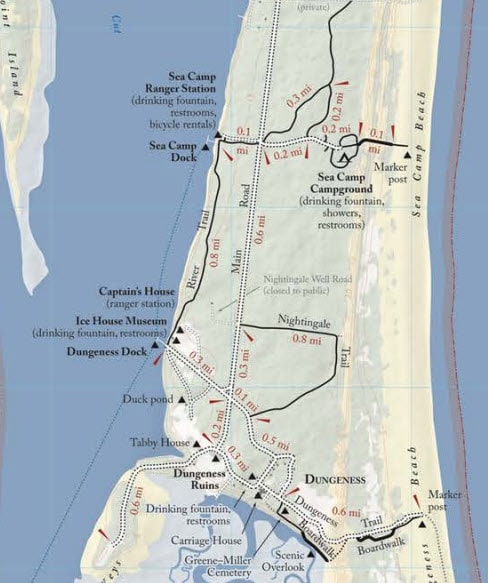
📍 Want to plan your route?
Here’s a detailed trail map from the Georgia Conservancy with distances, terrain types, and points of interest marked clearly.
5. Spot Wildlife in Their Natural Habitat
One of the most unforgettable parts of visiting Cumberland Island is the chance to see wildlife roaming completely free. There are no enclosures, no feeding stations, and no fences… just you, the trail, and whatever crosses your path.
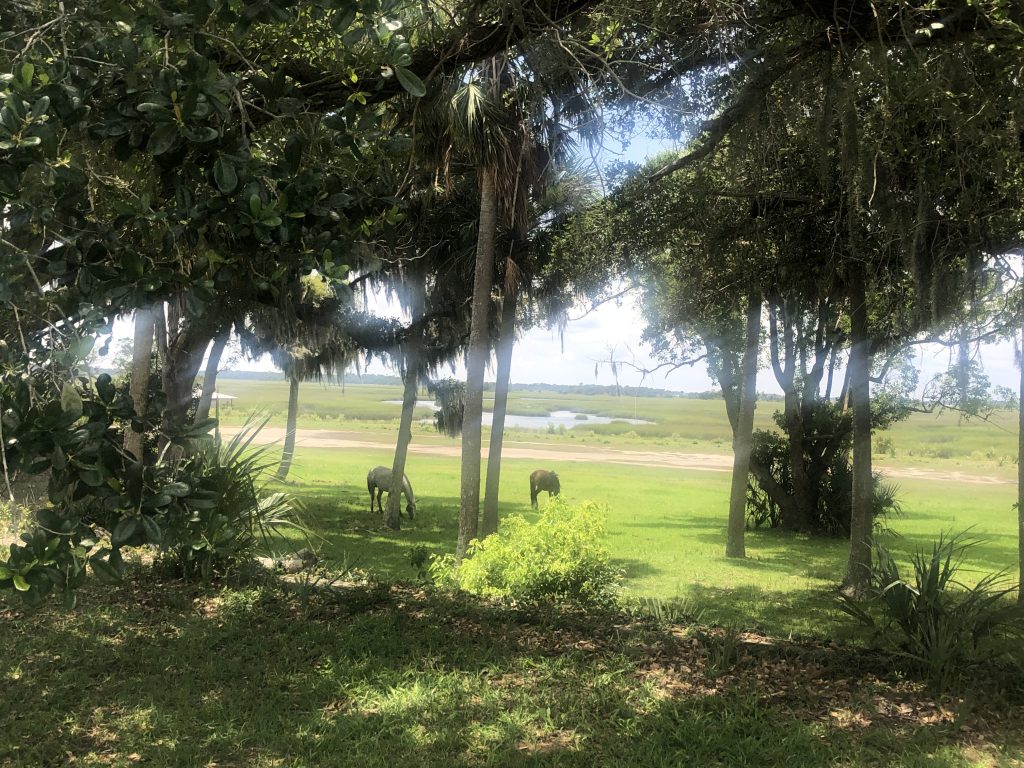
The wild horses are what everyone talks about, and for good reason. You’ll likely spot them grazing near the Dungeness Ruins or meandering through the marshes. They may seem tame, but they are wild, and it’s important to give them space.
But horses are just the beginning.
On our visits, we’ve seen armadillos, deer, hogs, and a wide variety of birds… we would love to tell you what kinds of bird but that just isn’t our forte. Sorry!
The River Trail and boardwalks through the marsh are especially good for birdwatching.
A few things to remember:
- Don’t feed or touch the animals. They’re wild, and it’s illegal (and unsafe) to approach them.
- Stay quiet and observant. The island tends to reveal its best moments when you slow down.
- Bring binoculars if you want to spot birds or shy critters from afar.
If you’re a nature lover, this is the kind of place that will stay with you long after you leave.
6. Enjoy the Secluded Beaches
Cumberland Island isn’t just wild forest and historic ruins; it’s also home to some of the most peaceful, untouched beaches you’ll ever walk.
The shoreline here stretches for miles, and on most days, you won’t see another soul. No umbrellas, no lifeguards, no beachfront development. Just wind, waves, and maybe a few hoofprints in the sand.
The easiest beach access is from the Sea Camp Beach Trail. Once you’re there, you can head north or south as far as your legs will take you. We’ve eaten lunch on driftwood, watched dolphins offshore, and walked for a mile without seeing another person.
A few quick tips:
- Bring a towel or lightweight chair.
- Watch the tide. It can come in faster than you expect, especially in winter.
- Swim at your own risk. The water is beautiful, but there are no safety personnel.
Whether you’re sunbathing, wading, or just enjoying the solitude, the beaches here are what off-the-grid dreams are made of.
7. Visit the First African Baptist Church & The Settlement
Tucked into the north end of Cumberland Island is a small but powerful piece of history: The Settlement. Established by formerly enslaved people after the Civil War, this small community tells a story that often gets overshadowed by the Carnegie legacy.
The most well-known site here is the First African Baptist Church, a simple one-room structure that gained national attention when John F. Kennedy Jr. held his secret wedding there in 1996. But beyond the celebrity connection, the church and surrounding area offer a deeper, often overlooked narrative of the island’s past.
You’ll find a few preserved homesites and interpretive signs nearby that help tell the story of those who once lived here. It’s not a long stop, but it’s a powerful one.
To visit The Settlement:
- Join the Lands and Legacies Tour, which includes The Settlement as a stop.
- Bike or hike north, about 16 miles round trip from Sea Camp. This is only recommended for well-prepared visitors with time and stamina.
It’s a quiet contrast to the grand Carnegie mansions and a reminder that the island’s story is more than just one chapter.
8. Go Fishing or Join a Managed Hunt
Looking for something a little more rugged? Cumberland Island offers some permit-only activities that let you experience its wilder side: fishing and managed hunting.
Fishing on Cumberland Island
Fishing is allowed throughout the island and is a peaceful way to spend part of your day near the marshes or along the beach.
You can cast a line from shore, from the dock, or from a private boat if you arrive by water. Common catches include redfish, flounder, and sea trout.
You’ll need to bring your own gear and have a valid Georgia fishing license. Since there are no shops on the island, be sure to plan ahead and pack everything you need.
Managed Hunts (October through January)
Cumberland Island also hosts seasonal hunts to help manage the populations of deer and feral hogs. These controlled hunts are organized by the National Park Service and are open to the public through a permit system.
If selected, you’ll need to be fully self-sufficient, including primitive camping and following all regulations. During hunt periods, areas like Plum Orchard are often closed to non-hunting visitors, so even casual travelers should check the schedule before planning their visit.
These experiences aren’t for everyone, but they highlight how Cumberland remains a working wild landscape, not just a National Park for sightseeing.
9. Camp Overnight Under the Stars
If a day on Cumberland Island feels like stepping back in time, spending the night takes it one step further. With no artificial light, no traffic, and no distractions, camping here is an off-grid experience in the truest sense.
There are five designated camping areas on the island, each with varying levels of amenities:
- Sea Camp Campground is the most accessible, located just a half-mile from the ferry dock. It has restrooms, picnic tables, and even cold showers.
- Stafford Beach offers a more rustic experience with fewer amenities, about 3.5 miles from Sea Camp.
- Wilderness sites like Hickory Hill, Yankee Paradise, and Brickhill Bluff are deep into the island’s interior and require more intense preparation.
No matter where you stay, you’ll need to bring everything with you and pack everything out. Reservations must be made in advance through Recreation.gov.
Camping on Cumberland means falling asleep to ocean waves, waking to misty marshes, and experiencing the island in its quietest hours. If you’re looking for a truly wild escape, this is it.

Next Step: Plan Your Visit
If you’re planning your first visit and want help figuring out how to get there, what to pack, and what a day on the island actually looks like, check out our guide to planning a Cumberland Island day trip. We share exactly how we visited by private boat, what we did with our time, and what we’d do differently next time.
And if you’re exploring the area for a few days, consider adding Fort Clinch State Park to your itinerary. It’s just across the water from Cumberland Island and offers its own quiet trails, coastal views, and Civil War history. You may also be interested in some fun things to do in Amelia Island!