
The Top 9 Things To Know Before You Travel America In An RV
Thinking of RV travel across America but feeling totally overwhelmed? We get it. Planning your first big trip can feel like juggling maps, apps, and anxiety all at once.
When we first hit the road, we had no idea what we didn’t know.
From campground surprises to tow vehicle regrets, we learned most things the hard way. (Yes, we actually traveled with what we now call our “redneck toyhauler.”)
Since then, we’ve traveled thousands of miles in nearly every kind of RV. We’ve picked up hard-earned lessons that could save you from common mistakes and help you hit the road with confidence.
In this post, we’re sharing 10 essential tips we wish we had known before traveling America in an RV. Whether you’re planning a long road trip or diving into full-time RV life like us, this guide is packed with practical advice, honest stories, and hopefully a few laughs. Let’s get started!
Things To Know Before You Travel In An RV
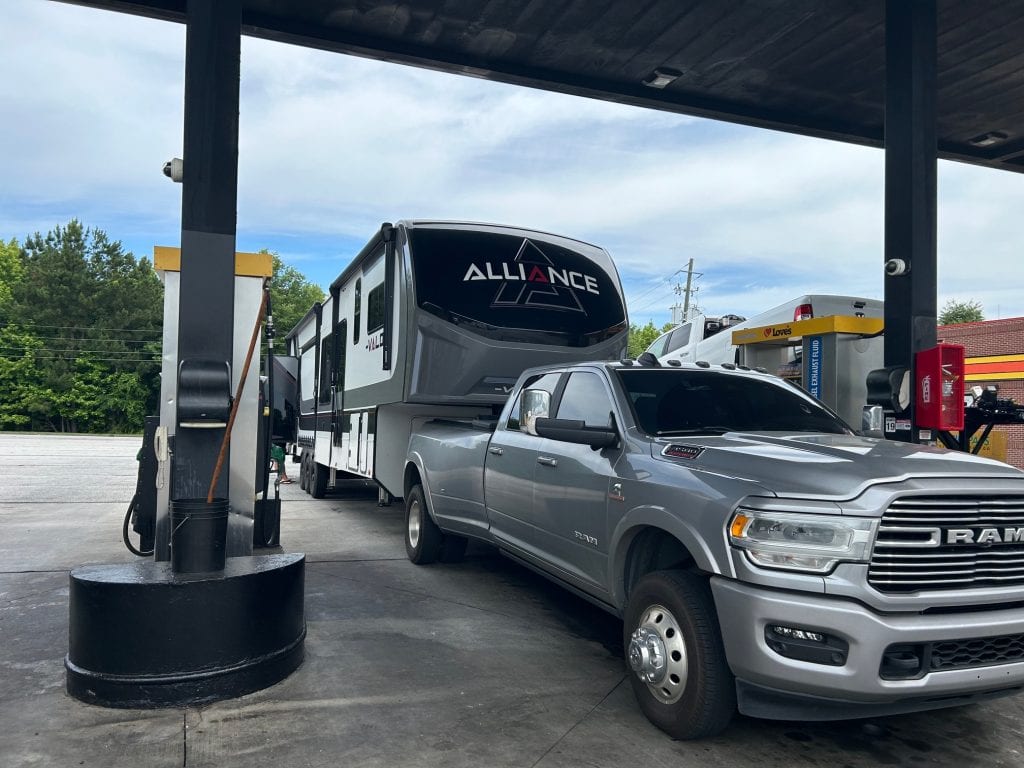
1. Not All RVs Are Created Equal
Choosing the right RV is one of the most important decisions you will make when planning RV travel across America. Not all rigs are built for the same kind of adventure. What works for one traveler might be completely wrong for someone else.
Long before we went full-time, we camped in what we now lovingly call our redneck toyhauler. It was a DIY setup that let us bring our side-by-side along for the ride — fun, functional, and perfect for weekend adventures…. until it was pouring down rain and Morgan needed to pee.
It taught us how much your rig choice shapes the camping experience, especially when it comes to space, layout, and comfort.
Here are the most common types of RVs and when they make sense:
Class A Motorhomes
Typically large and luxurious, these rigs offer big living spaces and tons of storage. They are great for long trips but can be a challenge in national parks, older campgrounds, or tight mountain roads.
Class C Motorhomes
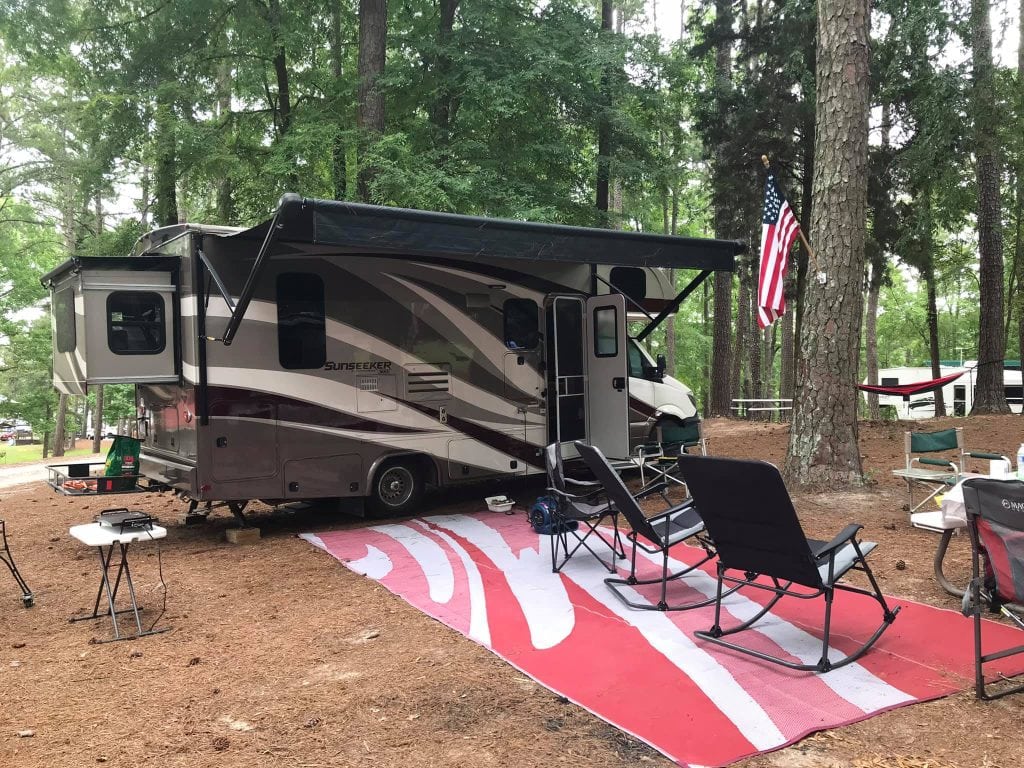
Smaller than a Class A but still a drivable RV. Class Cs offer a nice balance between space and easy maneuverability.
They are often a great choice for newbies.
Class B Camper Vans
Simple and easy to drive, camper vans are great for solo travelers or couples who want to explore cities or camp more stealthily. The space is extremely limited, but the flexibility is hard to beat.
Pop-Up
Lightweight and compact, pop-ups can be towed by many family vehicles. They are budget-friendly but require more setup and usually do not include a bathroom.
We think of these as glorified tents.
Travel Trailers and Fifth Wheels
These towable RVs give you the freedom to unhitch and explore in your vehicle.
We started with a travel trailer and loved being able to run errands or hit a trail without breaking down camp. Fifth wheels are usually larger and more residential in layout with the most usable space.
Toyhaulers


These include a garage for gear like bikes, ATVs, or side-by-sides. Most are fifth wheels, though some are available as travel trailers or motorhomes.
Just remember that garage space comes at the cost of living space.
What we learned the hard way
We underestimated how much layout and space would impact our daily life. Upgrading to a fifth wheel gave us office space, better storage, and a more livable layout for full-time RVing. That one change made RV life feel sustainable.

Tip: Think about how you want to live, not just how you want to travel. If your dream includes long stays in nature, room for a pet, or a place to work comfortably, your RV choice needs to reflect that.
Would you prefer to travel in a truck or in a drivable RV? If you want to drive an RV, will you tow a vehicle behind it? If not, how will you get around? Do you have a truck or SUV that can pull a camper?
Left: Morgan is working as a Virtual Assistant from the passenger seat of our truck. Meanwhile, our friends in the Class A in front of us are watching movies on the sofa while going down the road.
Personally, we would rather have more space while camping than while driving down the road.
Not sure which type of RV is right for you? Consider renting one or two different styles to test floorplans before making a purchase. It can help you avoid a costly mismatch.
2. Campgrounds Vary Wildly
Traveling in an RV can take you to some unforgettable places… and some you might rather forget.
We have stayed at stunning lakefront sites and in gravel lots behind gas stations. Some campgrounds were so peaceful we extended our stay. Others had us counting down the nights (minutes is more like it).
Here are a few important things to know:
Private Campgrounds
These often have full hookups, laundry, Wi-Fi, and sometimes pools or clubhouses. But they can feel busy or overly structured, especially in peak season.
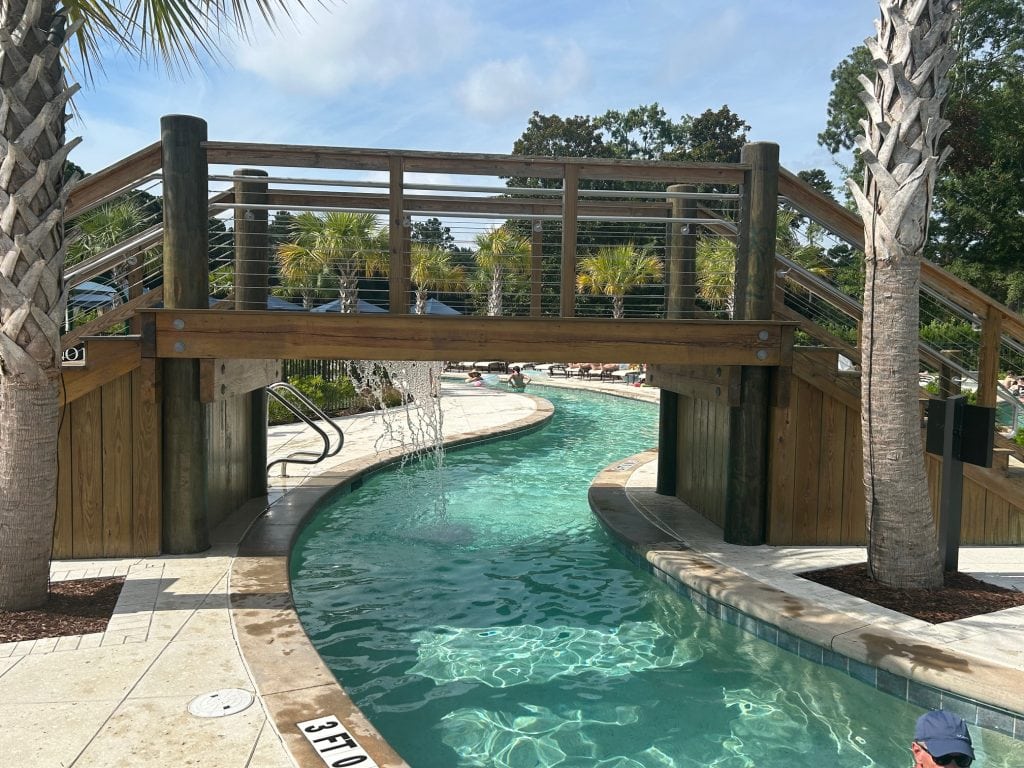
Some cater to families, others to long-term residents, and a few (like Hilton Head National RV Resort) offer both adult-only and family-friendly sections.
State and National Parks
These sites offer a closer connection to nature but fewer amenities. You may not get full hookups or reliable cell service, and many parks cannot accommodate larger rigs.
Reservations tend to fill quickly, especially for popular destinations. Still, they are some of our favorite places to stay.
Check out Bald Ridge Campground or Shady Grove Campground if you are headed through North Georgia.
Boondocking Locations
Camping off-grid can be a highlight of RVing IF you are prepared. Our first boondocking spot had epic mountain views, but we ran out of water on day four… Now we always keep an eye on our water tank and plan ahead.
Tools like these helpful RV apps make it easier to find legal, quiet spots for free camping.
Quick Overnight Parking Options
Sometimes you just need a safe place to stop for the night. We have parked at Cracker Barrel, Cabela’s, Loves, and even small-town fairgrounds. These are not scenic, but they are often free, accessible, and surprisingly convenient.
One of our favorite overnight options in using Harvest Hosts, which allows you to park at wineries, farms, breweries, and more. In exchange for supporting the local business, you get a peaceful and memorable stop.
What We’ve Learned
Photos can be misleading. We always check recent reviews and satellite view plus we use apps like RV Life Pro before booking. Look for up-to-date traveler feedback about accessibility, noise, cleanliness, and overall experience.
Tip: Keep a personal list of campgrounds worth returning to. We maintain a private map with notes on every site we visit so we can quickly rebook favorites and avoid duds.
3. Boondocking Isn’t Just for Hardcore RVers
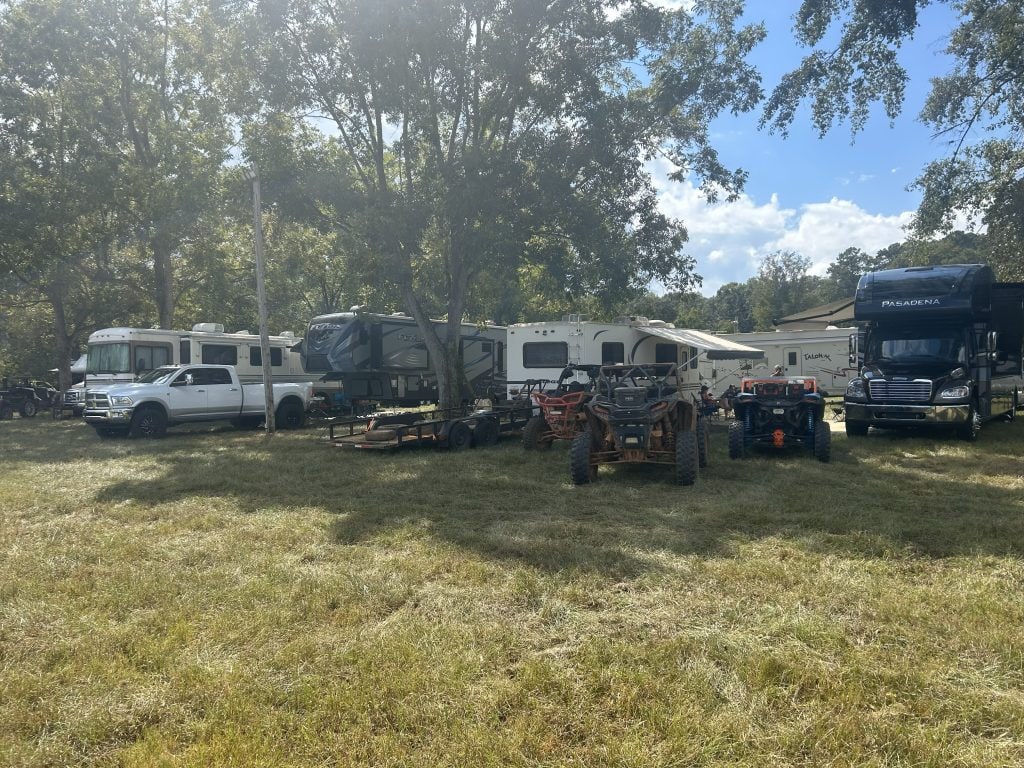
We used to think boondocking was only for rugged RVers with solar panels and composting toilets. That was way outside our comfort zone.
Then we tried it and realized it was actually one of the most peaceful ways to camp.
Boondocking, or dry camping, means staying somewhere without hookups. No water, electric, or sewer. It might sound intimidating at first, but it is easier than you think. Some of our favorite campsites have been far from crowded campgrounds.
What You Need to Know
You do not need a high-tech rig or fancy setup. Start small. Pack extra water. Know your limits. Scout the site before arriving if possible.
Apps like Boondockers Welcome, Campendium, and iOverlander are great for finding legal, quiet spots.
Tip: If you are new to boondocking, try it for a night or two near town. You will build confidence quickly and discover a whole new side of RV travel.
4. RV Life Requires More Planning Than You Think
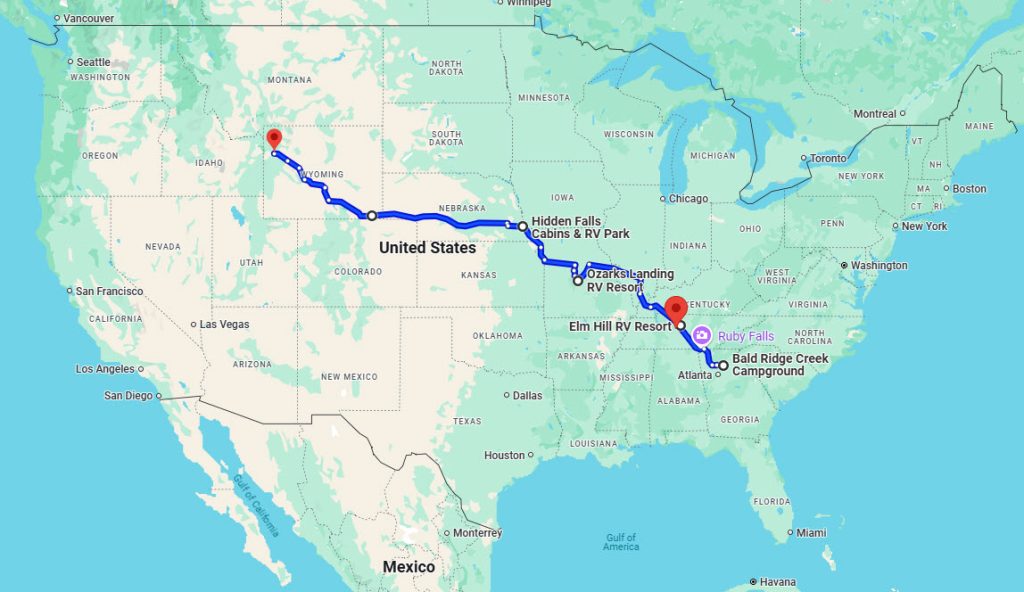
One of the biggest surprises about RV travel was how much planning it actually takes. We assumed we could just drive, find a campground, and settle in. That worked once or twice, especially when we had a smaller rig.
Then we hit a weekend with no vacancies, a steep road that made us nervous (WYO 22 and its 10 percent grade), and a town with no cell service.
That was when we realized RV life sometimes needs more than a go-with-the-flow mindset.
What We Plan Ahead
- Campground reservations, especially near national parks or on weekends
- Routes with safe grades, no low clearances, and plenty of fuel stops
- Grocery runs, laundry access, and dump stations
- Internet coverage for work
We use tools like RV Life Trip Wizard, Campendium, Google Maps, and a few favorite weather apps to help us plan smarter and avoid surprises.
Tip: Build margin into your schedule. Delays and detours are part of the lifestyle. A little buffer goes a long way when something unexpected pops up.
5. Travel in an RV Can Be Physically and Mentally Draining
RV life may look dreamy on Instagram (and don’t get me wrong… we do love it!), but it can wear you down. Long drive days, tight spaces, constant logistics, and unpredictable weather all add up. This is especially true if you’re doing full-time RVers like us.
We have had times when we moved too often, picked a campground that didn’t work for us, or just hit a wall. Small issues feel bigger when your entire life is packed into a few hundred square feet.
What Helps Us Recharge

- Scheduling full rest days with no driving (Coco agrees!)
- Staying longer in one spot
- Getting outside for a walk, hike, or bike ride
- Taking solo time when needed
- Letting go of perfect plans
Knowing when to slow down has been one of the biggest lessons we’ve learned on the road.
6. Internet Is a Challenge But Not Impossible
If you work remotely like Morgan, having reliable internet on the road is essential. RV life has taken us to some incredible places, but not all of them come with a usable signal.
For a long time, we traveled with T-Mobile Home Internet. It worked well as long as we had signal. We would unplug it while driving and plug it back in once we arrived at a new location. I used my Verizon phone’s hotspot as a backup, especially during drive days.
Then we arrived in Moran, Wyoming…
T-Mobile’s internet didn’t work at all. My Verizon hotspot barely held a connection. Thankfully, Alan was working with a campground that let me hop on their Starlink Wi-Fi for a few days. It was strong enough to get me through remote work, and I ordered our own Starlink setup immediately.
Now, we keep both. When T-Mobile works, we use it and put Starlink on standby… because let’s be honest – T-Mobile is cheaper. If T-Mobile doesn’t work, we switch Starlink on and get solid speeds almost anywhere.
What We’ve Learned
- Most campground Wi-Fi is rarely strong enough for video calls or streaming
- If you are truly on vacation, campground Wi-Fi might be fine.
- If you’re a digital nomad like Morgan, you need a backup plan
We share more about our experience in these posts on using Starlink for RV internet and traveling with T-Mobile Home Internet.
7. Pack Light But Pack Smart
RV travel teaches you quickly that space is limited and weight matters. When we went full-time, we started out with way too much. There were kitchen gadgets we never touched, clothes we didn’t wear, and tools we brought “just in case.”
Everything you bring should earn its place.
What We Downsized
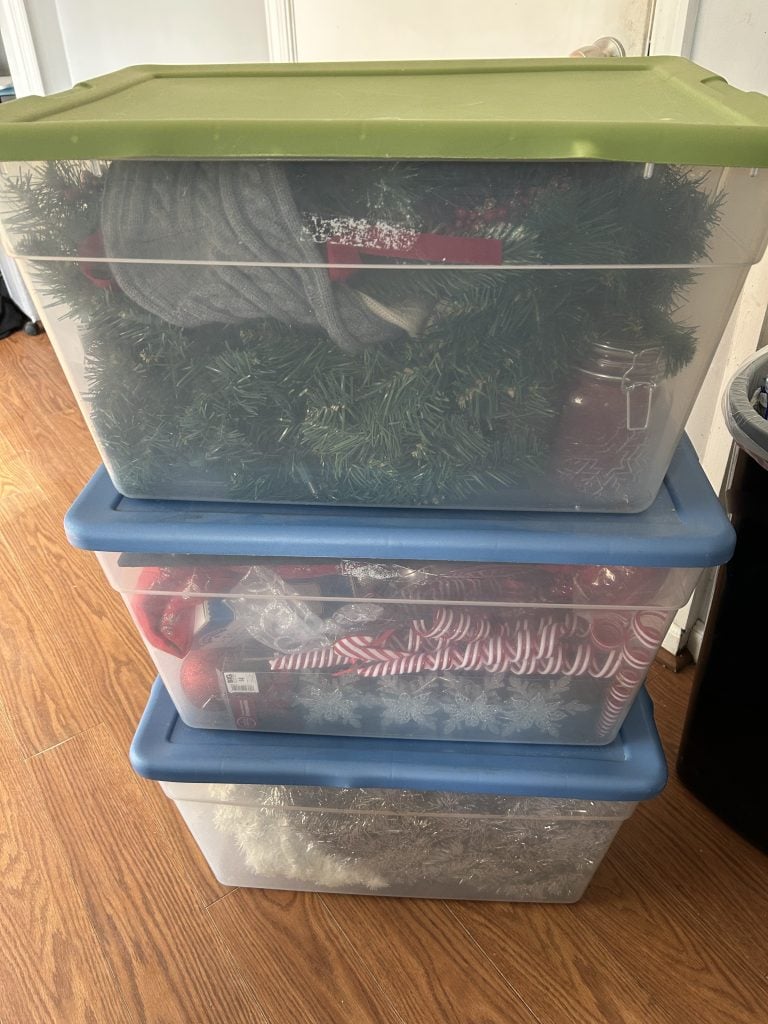
- Extra dishes
- Morgan’s Christmas decorations (she thought she had to keep them all)
- Tools we never used
- Random gadgets
- Way too many clothes
We spent our first seven months wearing the same outfits on repeat. Most of our wardrobe just took up space.
What We’re Glad We Kept
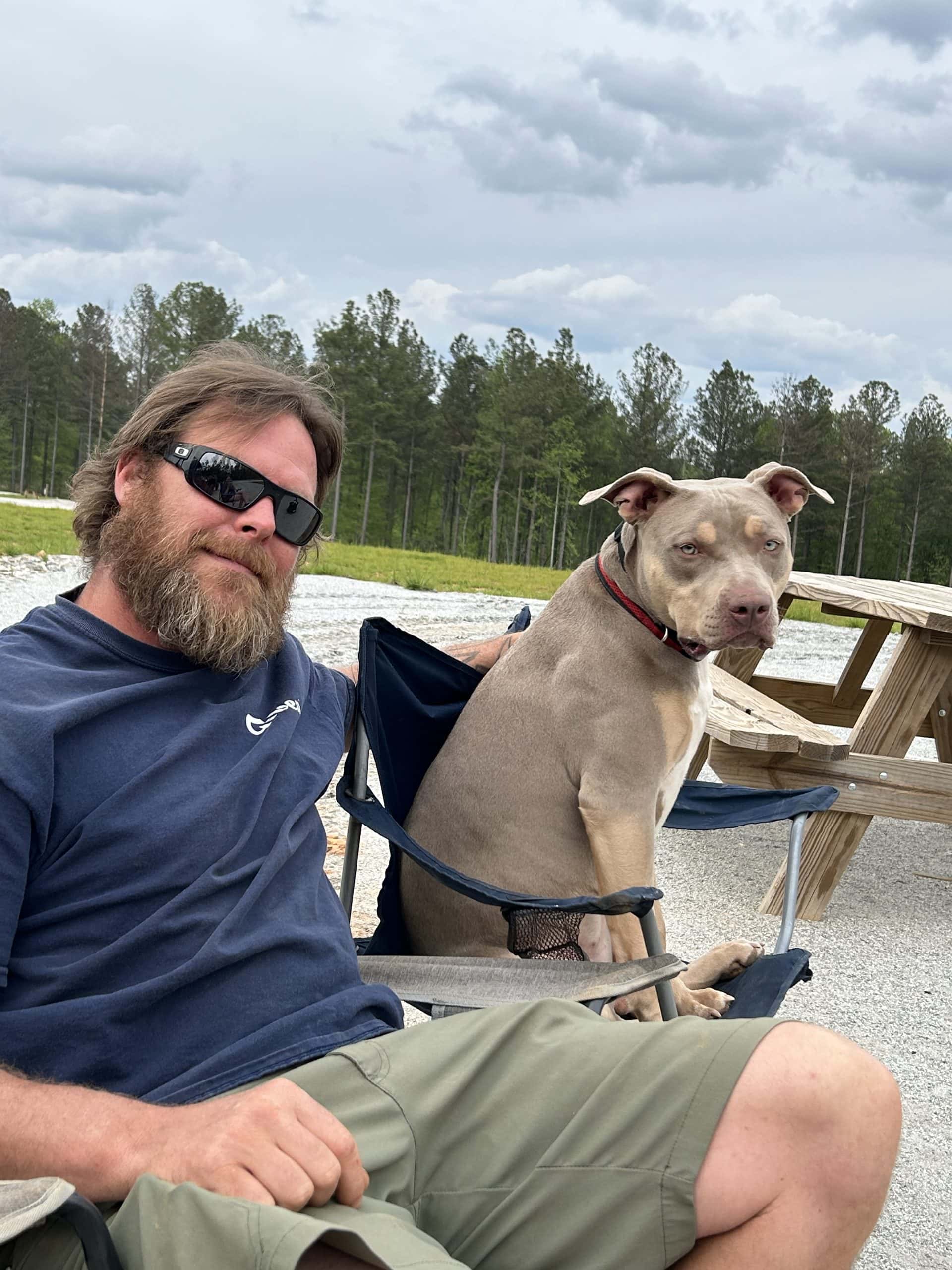
- Multiple camp chairs for when we have guests (and for Coco pup)
- A collapsible table for outdoor work or meals
- Basic tools we actually use like a drill, wrenches, and sealant… ok Alan actually kept the vast majority of his tools…
- Labeled bins and collapsible storage containers
Over time, we built systems that work. Everything has a spot and serves a purpose.
Need help figuring out what’s worth packing? Our full guide to RV essentials for beginners covers the gear we use daily.
8. RV Repairs and Maintenance Are Inevitable
No matter how new or well-built your RV is, something will break eventually. It’s part of the lifestyle.
We have had a TV nearly fall off its bracket, a broken dinette table, and refrigerator issues that left ruined our food.
Some fixes we handled ourselves. Others required warranty work and professionals.
What Helps Us Stay Ready
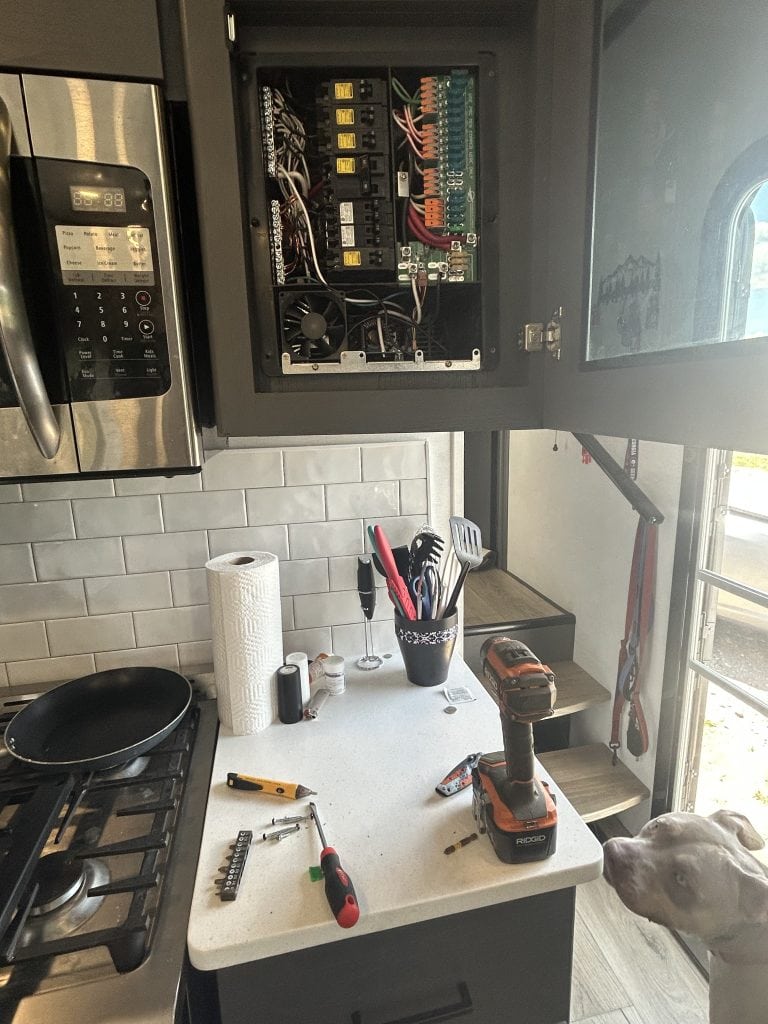
- A basic toolkit with spare fuses, sealant, and hand tools
- Regular walkarounds before travel days
- Knowing when to DIY and when to call for help
You don’t have to be an expert mechanic. But the more you learn about how your RV works, the better off you’ll be when something goes wrong.
Tip: Set aside time and money for maintenance and repairs. It’s not glamorous, but it keeps your adventures rolling.
9. You Don’t Need to Have It All Figured Out
Even with years of RV experience between us, we still learn new lessons on the road.
Things break. Plans shift. Sometimes the weather turns, a campground doesn’t work out, or your carefully chosen route has a low clearance no one warned you about.
That is part of what makes RV life interesting.
You adjust. You learn. You figure it out one stop at a time.
What We’ve Learned
- Everyone’s travel style is different
- What works for someone else might not work for you
- Flexibility matters more than perfection
The goal is not to have a perfect trip. It is to enjoy the ride, solve problems as they come up, and build confidence as you go.
Planning An RV Trip Across America
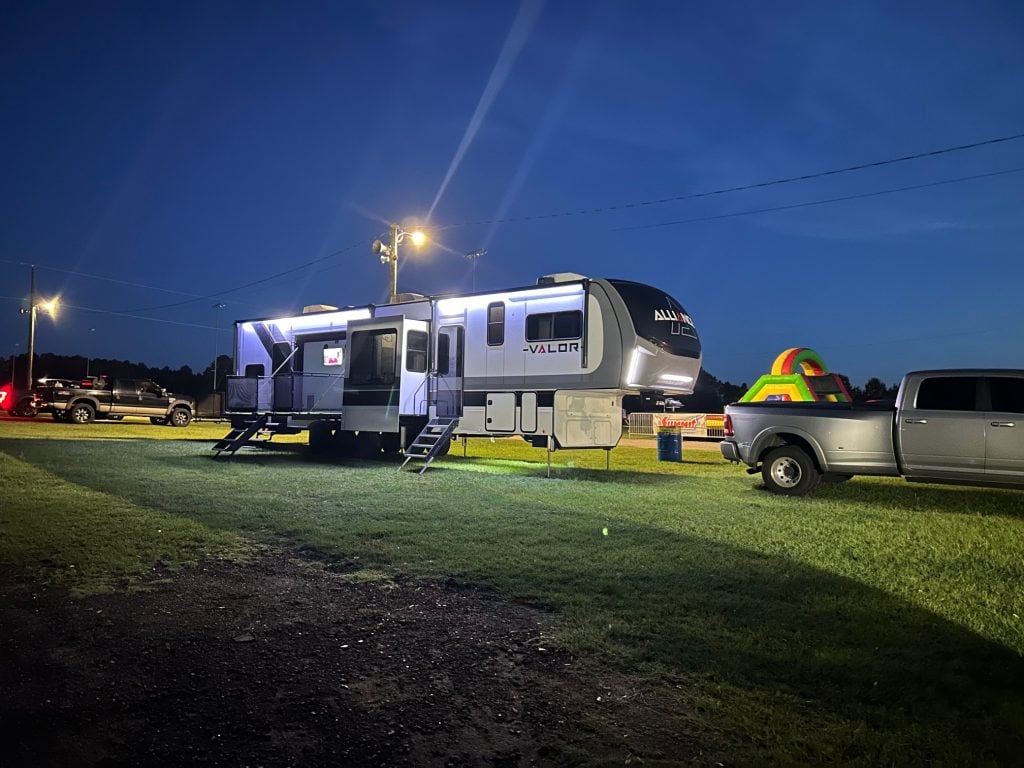
Planning your first RV trip across the country can feel overwhelming at first, but it doesn’t have to be. Break it into manageable steps and it quickly becomes something exciting to plan, not something to survive.
Think about the important, specific details first:
- Who is going?
- When are you going and for how long?
- Where do you want to go — one destination or many?
- Will you need any passes, permits, or reservations in advance?
Once you have that foundation, move into the details. Plot your route, book your campgrounds, prep your gear, and make sure you have the tools to stay connected and safe.
For a complete walkthrough, check out our guide on how to plan your first RV trip.
Ready to Travel America in an RV?
Traveling America in an RV is one of the most rewarding ways to see the country. You get freedom, flexibility, and front-row seats to some of the most incredible views in the world. But it also comes with a learning curve.
We have made mistakes, solved problems, and figured out what works for us. These tips come from real miles, real repairs, and real lessons learned along the way.
If you are just getting started, we hope this gives you a clearer picture of what to expect. If you have been doing this a while, maybe it is a reminder that we are all still learning out here.
The only downside to (full-time) RVing, as far as we can tell, is that we didn’t start sooner.
New to RV Life? Here’s What to Read Next
If you’re just starting your RV journey, we’ve got more resources to help you hit the road with confidence:
- 👉 RV Essentials for Beginners – Gear you actually need (and what you can skip)
- 👉 How to Plan Your First RV Trip – A step-by-step trip planning guide
- 👉 Helpful RV Apps – Navigation, campgrounds, weather, and more
- 👉 Unwritten Rules of RV Etiquette – Don’t be that neighbor
- 👉 RV Travel Is the Best Way to Explore the US – In case you need a reminder of how awesome this life is
Whether you’re setting up for the first time or the fiftieth, we’re glad you’re here—and we’re always just a blog post away.